
Cold water tank in the loft: removal, leaks and cleaning
Older homes often have a cold water storage tank in the loft. Here is what it does, when it can come out, and what to do if it leaks or needs cleaning.
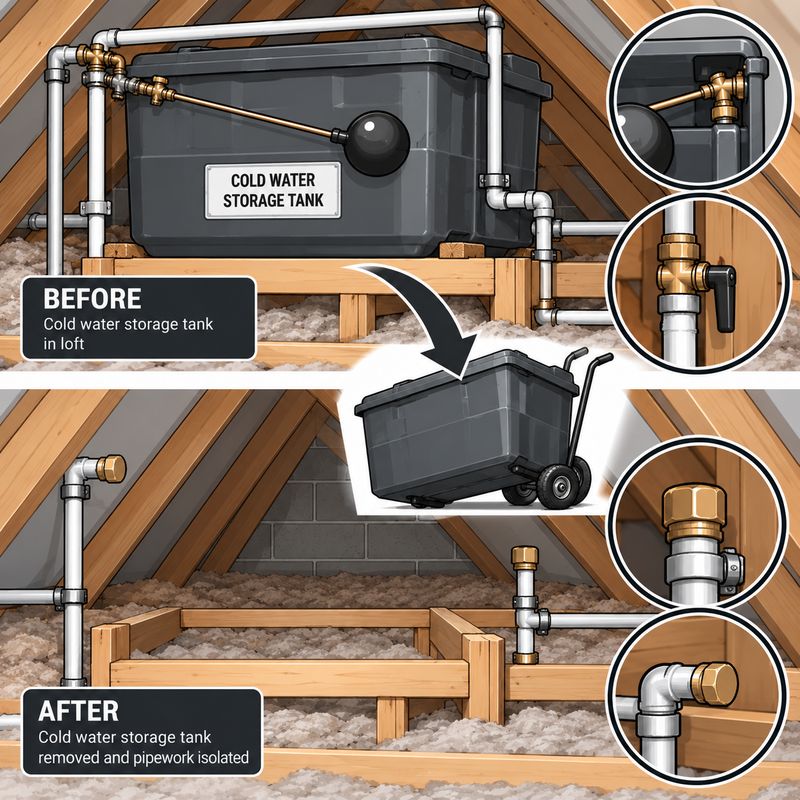
What the loft tank does
In a vented (gravity) hot water system, a cold water storage tank in the loft feeds the hot water cylinder, and sometimes some of the cold taps. Your water pressure depends on how high the tank sits above the taps.
Many homes also have a much smaller tank, the feed and expansion tank, which tops up an open-vented heating system. It is a separate tank with a separate job.
Can the tank be removed?
Usually yes, when you switch to mains-pressure hot water – either a combi boiler or an unvented hot water cylinder. Your incoming mains pressure and flow are checked at the survey first, because the new system relies on them.
When the tank comes out, the supply is isolated, the pipework is capped and redundant pipes are removed where they can be reached. The old tank is taken away. If the heating is converted to a sealed system at the same time, the feed and expansion tank can go too.
Benefits: more loft space, no tank to freeze or leak above your ceilings, and stronger showers.
Common tank leaks
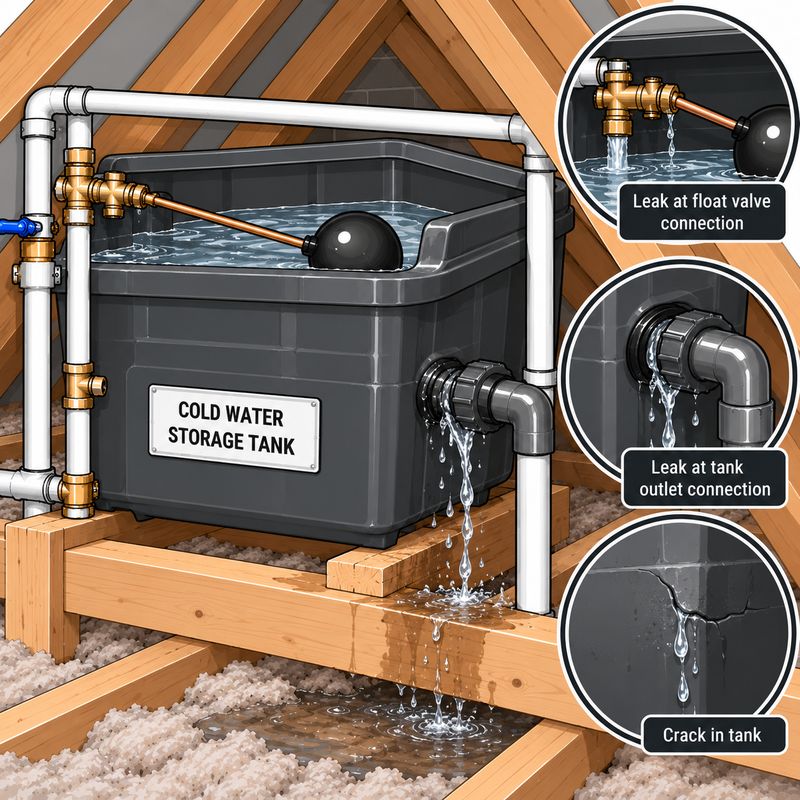
- Float valve connection – a worn washer or loose fitting where the mains supply enters the tank.
- Outlet connections – the fittings where pipes leave the tank can loosen or perish.
- Cracks – older plastic and steel tanks become brittle or corrode with age.
- Overflow running outside – usually a float valve that is not shutting off properly.
If the tank is leaking, turn off the supply to it at its service valve (often on the pipe going into the float valve) or at your main stopcock, protect the ceiling below, and call us.
Cleaning and disinfecting a tank
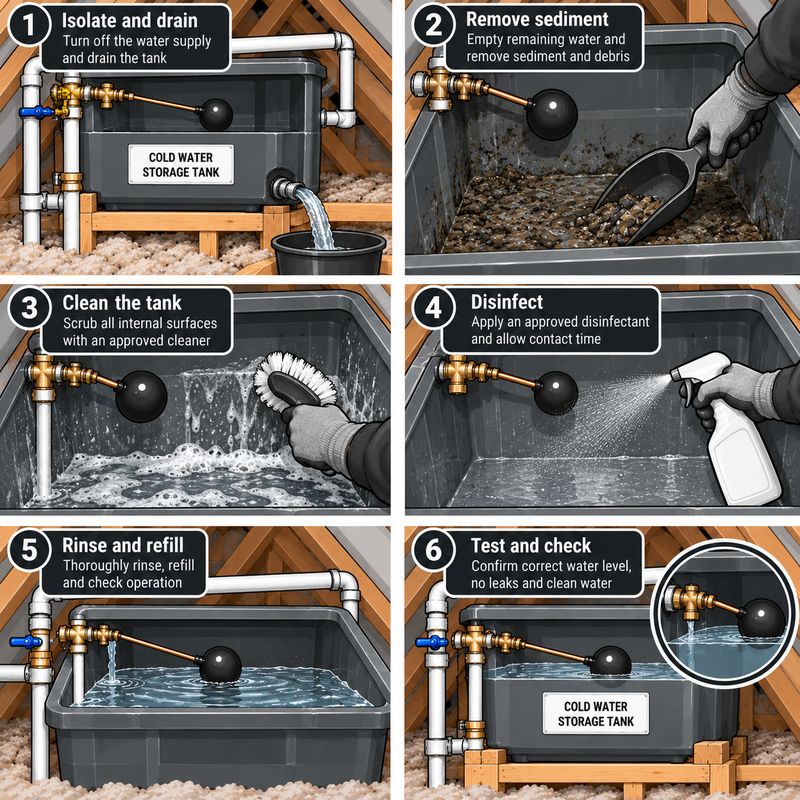
Sediment, rust and debris can build up in a tank over the years. A clean follows six steps: isolate and drain, remove sediment, clean the inside, disinfect with an approved product and leave it for the contact time, rinse and refill, then check the water level and look for leaks.
A tank that stores water for the home should have a close-fitting lid, insulation, and screened vent and overflow pipes so dirt and insects cannot get in. We check these at the same visit. Drink water from the mains-fed kitchen tap, not from a tank-fed tap.
Arrange a survey
Send your postcode and photos of the tank, the pipework around it, your hot water cylinder and your boiler. Fixed-price work is confirmed after an assessment – from photos or a short video where possible, otherwise at a visit.